A great logo doesn’t just look good—it works. It’s the face of your company, the first impression people have, and the visual handshake that introduces your brand to the world. But just like a person, a brand is more than a face. Your brand is your company’s personality, its voice, and its presence that builds recognition and trust over time. A well-designed logo not only exists—it speaks, represents, and reinforces what you stand for.
Every element of a logo has a purpose, and understanding all these components can help ensure your logo and brand identity are as strong as possible.
Breaking Down the Pieces
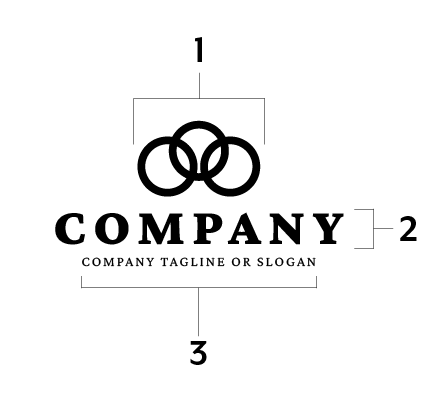
Every logo consists of different elements that work together to create a complete visual identity. Some brands use all of them, while others rely on just one or two. Let’s break it down:
1. Logomark
This is the symbol or icon of a logo—the visual piece that can stand on its own. Think about Apple’s apple, Nike’s swoosh, or Starbucks’ mermaid. A strong logomark can be recognizable even without the company name.
2. Logotype
This is the typography-based part of a logo—the company name written in a distinctive font or style. Coca-Cola’s script or Google’s colorful sans-serif letters are prime examples of a logotype-driven identity.
3. Tagline
Not all companies need a tagline, but when used well, it can reinforce a brand’s message. Nike’s “Just Do It” is the perfect example of a tagline becoming an inseparable part of a brand identity.
A well-designed brand and logo balance these elements in a way that feels intentional, memorable, and, most importantly, effective.
Logo Lingo: Jargon & Guidelines
- A logomark is sometimes called an emblem.
- A logotype is sometimes called a wordmark.
- A tagline is sometimes called a slogan.
- Not all brands use, have or need a tagline.
- All brands have, need either a logomark, logotype or a logomark and logotype.
Team Abovo™ Logo & Brand Design Process
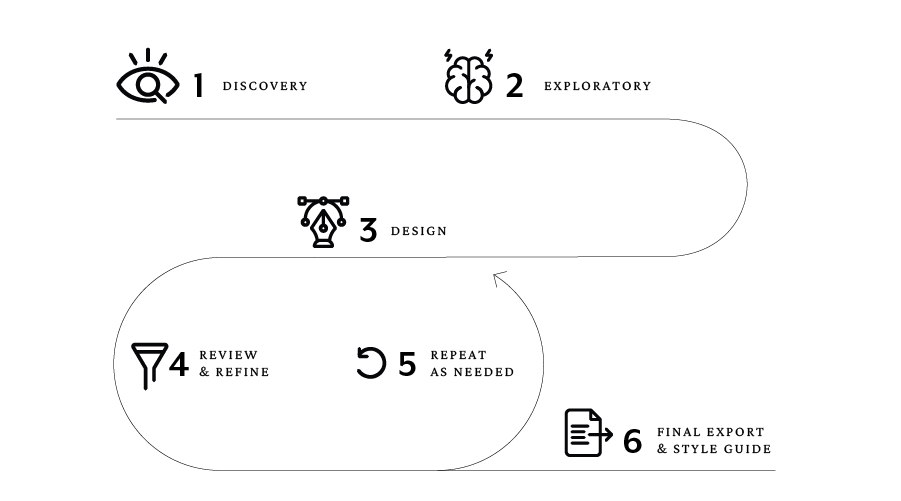
We don’t just design logos—we craft entire brand identities. A logo should be treated and approached as more than a graphic; it should be a powerful representation of your business. Our process ensures that every logo we create is strategic, timeless and designed to work in every application. Here’s how we do it:
1. Discovery
Before we sketch a single idea, we take time to understand your brand. What do you stand for? Who is your audience? What makes you different? This phase is all about gathering insights and setting the creative direction.
2. Exploratory
We research and brainstorm. We explore trends, competitors, and industries to ensure your logo stands out. This step helps us establish a unique position for your brand before any design work begins.
3. Design
This is where the magic happens. Our team creates multiple logo concepts based on everything we’ve learned in the previous steps. At this stage, we design in one color. The strongest logos hold their own in a single color—logos often appear in one-color applications like engraving, embroidery, or black-and-white printing. Color can also be a distraction. It’s like touring a house and getting stuck on the wall color, even though it’s an easy change. By focusing on form, typography, and balance first, we ensure the foundation is solid before adding anything else.
4. Review & Refine
Once the logomark and logotype are confirmed, we introduce color, ensuring it aligns with the brand’s personality and purpose. This phase focuses on refining details—adjusting spacing, weight, and overall balance—to create a logo that is both visually strong and strategically sound. The review process is intentional and efficient, and because so much thought is put into the exploratory phase, it’s rare for us to go beyond two to three rounds of refinement. The result is a logo that works in every application and stands the test of time.
5. Repeat 3 & 4 as Needed
Some logos are love at first sight; others need a few tweaks. Thanks to the intentional time we invest in the exploratory phase, it’s rare for us to go through more than 2–3 rounds of design and review. By the time we reach this stage, we’re refining, not reinventing—ensuring the final logo is polished, purposeful, and exactly right.
6. Final Export & Style Guide
Once the final logo is approved, we deliver it in multiple formats for every possible use case—print, web, social, embroidery, signage, and more. But a strong brand is more than a great logo—it’s about consistency. That’s why we provide a comprehensive brand style guide that outlines how to use the logo properly, from color specifications to spacing, ensuring a cohesive look across all platforms.
This guide isn’t only a reference—it’s a tool. For clients who manage some design work internally or collaborate with multiple designers and vendors, having clear brand rules in place ensures consistency, no matter who is handling the creative. Before any project starts, handing over the style guide keeps everything aligned, protecting the integrity of the brand. For a deeper look at what makes a strong style guide, check out our breakdown of the 19 key components every brand guide should include.